Papier ist (un)geduldig – colloquium 3. & 4.2.2025
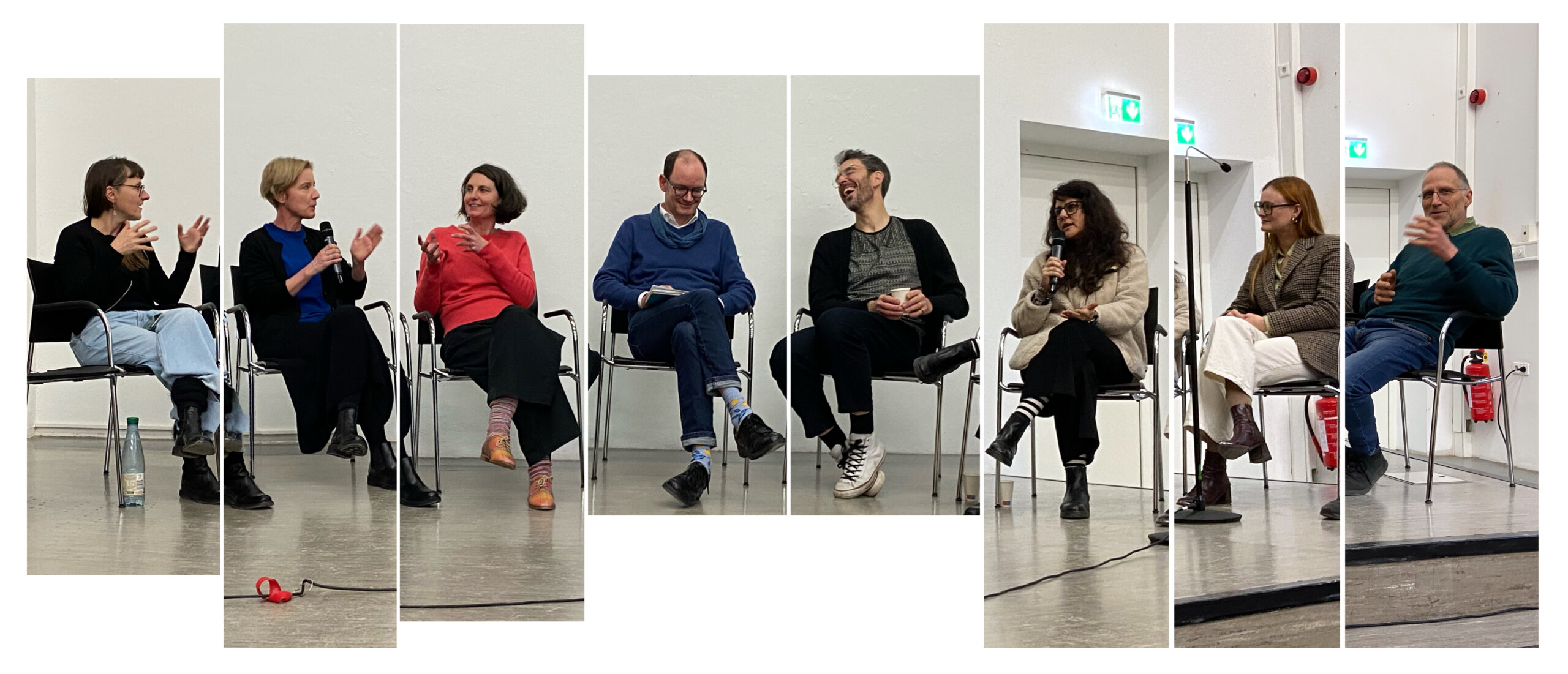
Paper occupies a unique place in the world of contemporary art. It is a support for drawing and printing and records the artist’s intentions, emotions and cultural discussions. Paper objects are created, collected, studied and preserved. We looked at paper in contemporary art from different perspectives: art production, conservation of art on paper and art-historical interpretation, its place in the art market. Our university offers this interdisciplinary environment, including a papermaking workshop, where we explore paper in all of its facets.
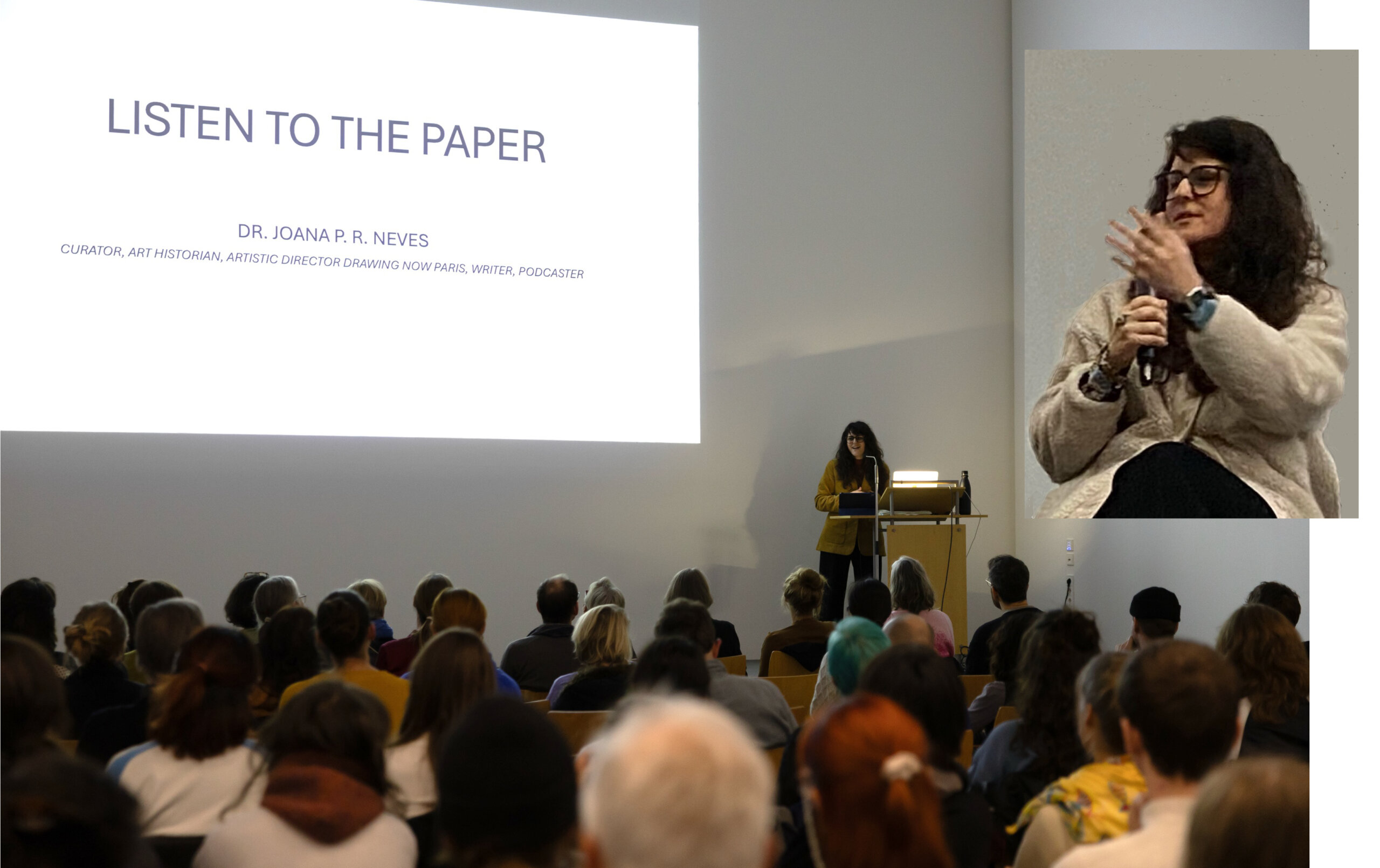
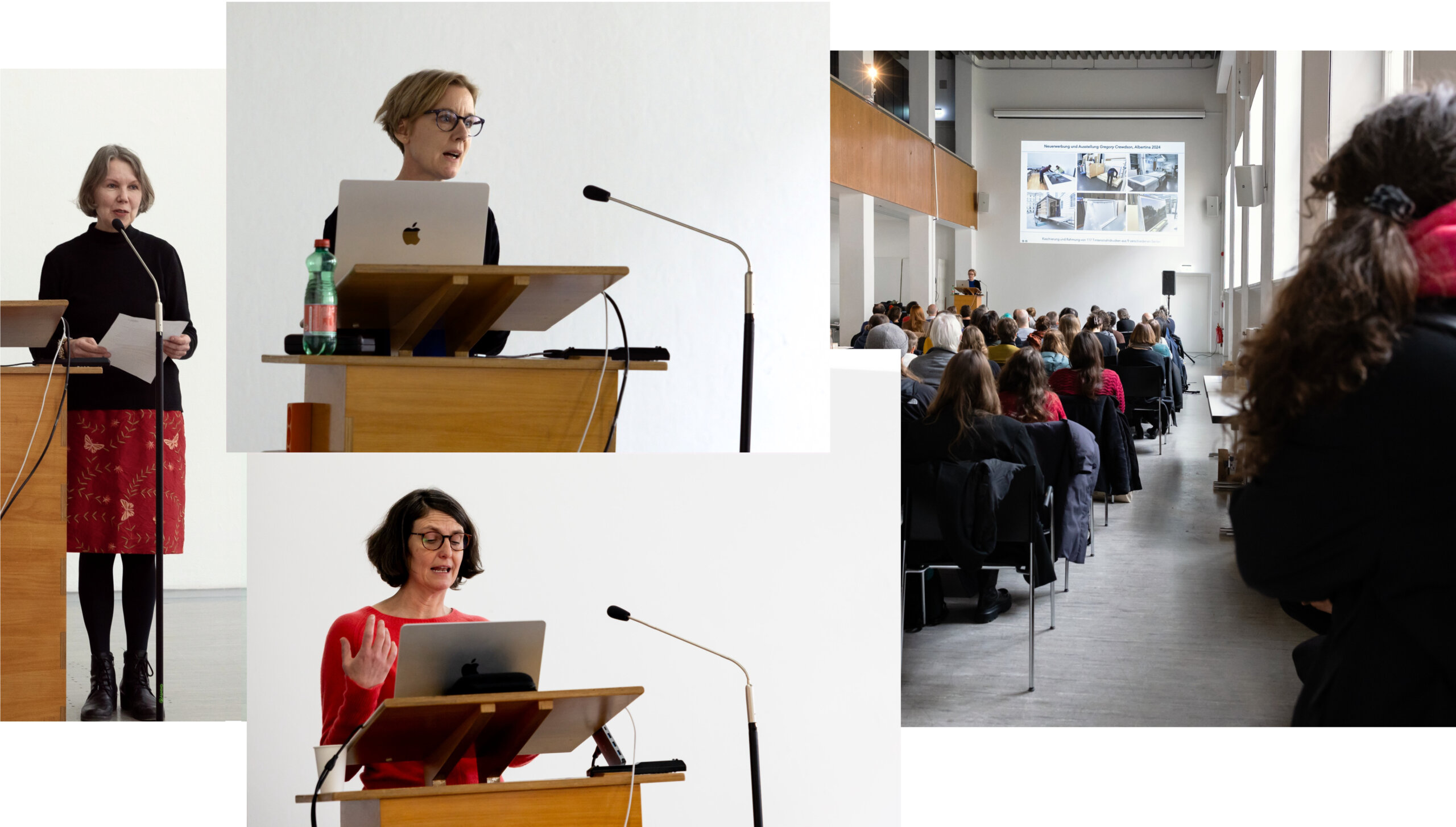
Joana P. R. Neves, London-based independent writer and curator and Artistic Director of Drawing Now art fair in Paris, spoke about the way drawing bridges the gap from writing to art illustrated by the case of Irma Blank, where the illegible cipher turns into a notation that approaches the world in a new semantic form.
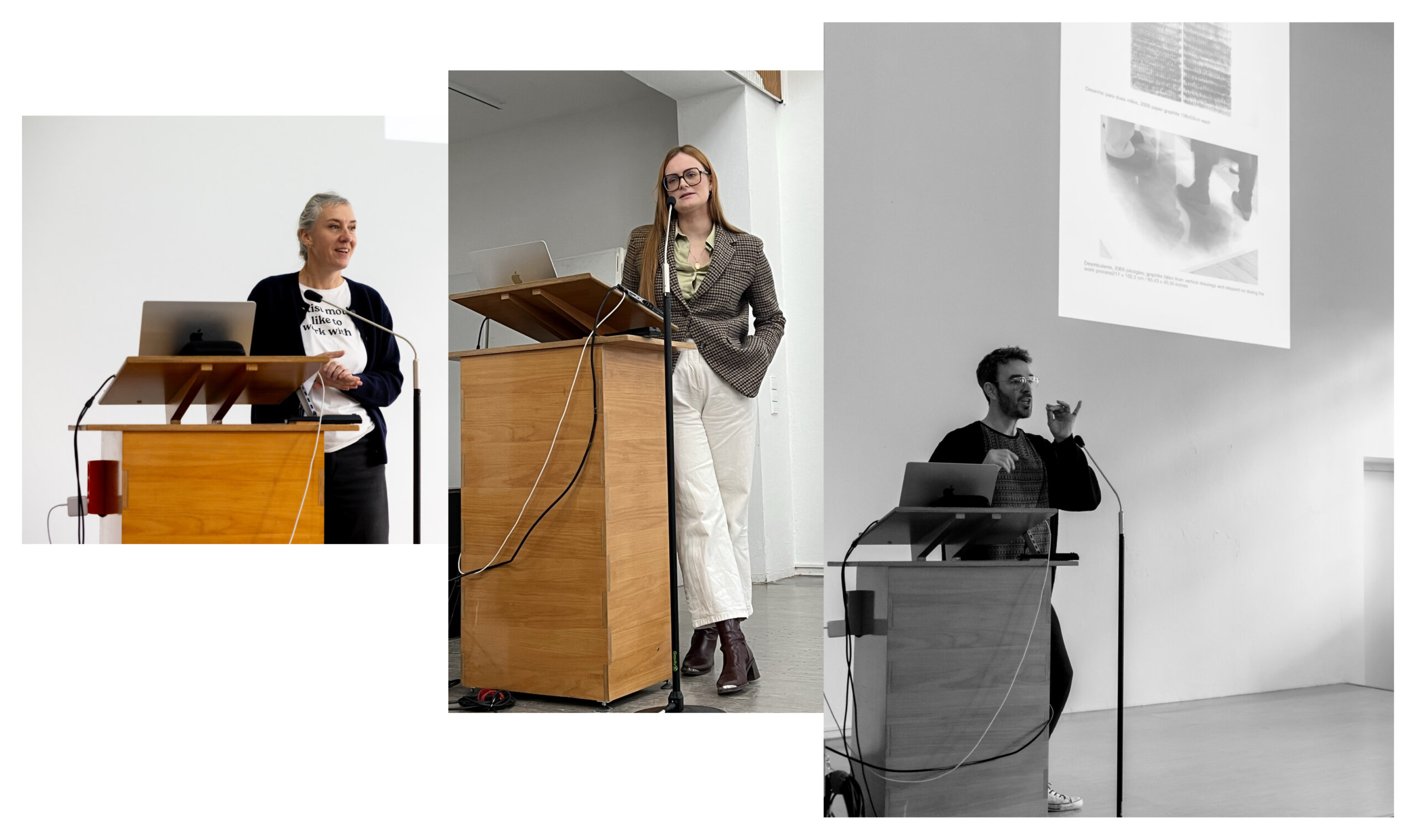
Esther Löffelbein, research assistant at the Staatsgalerie Stuttgart, related the creation of the exhibition THIS IS TOMORROW, which features 20th-century artists in different media and formats arranged in different thematic rooms. The challenge was to integrate the preservation concepts for works on paper with the curatorial concepts.
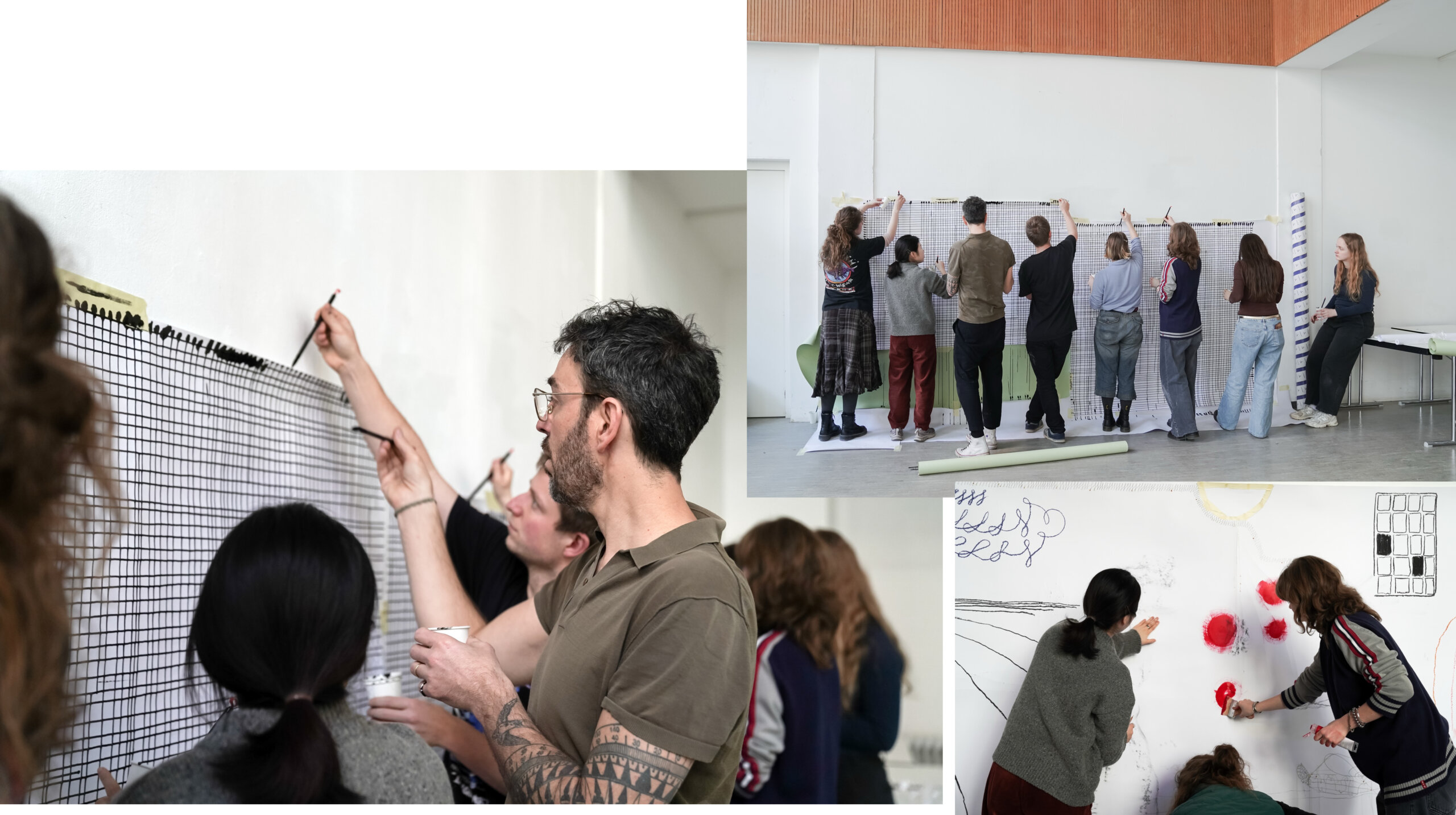
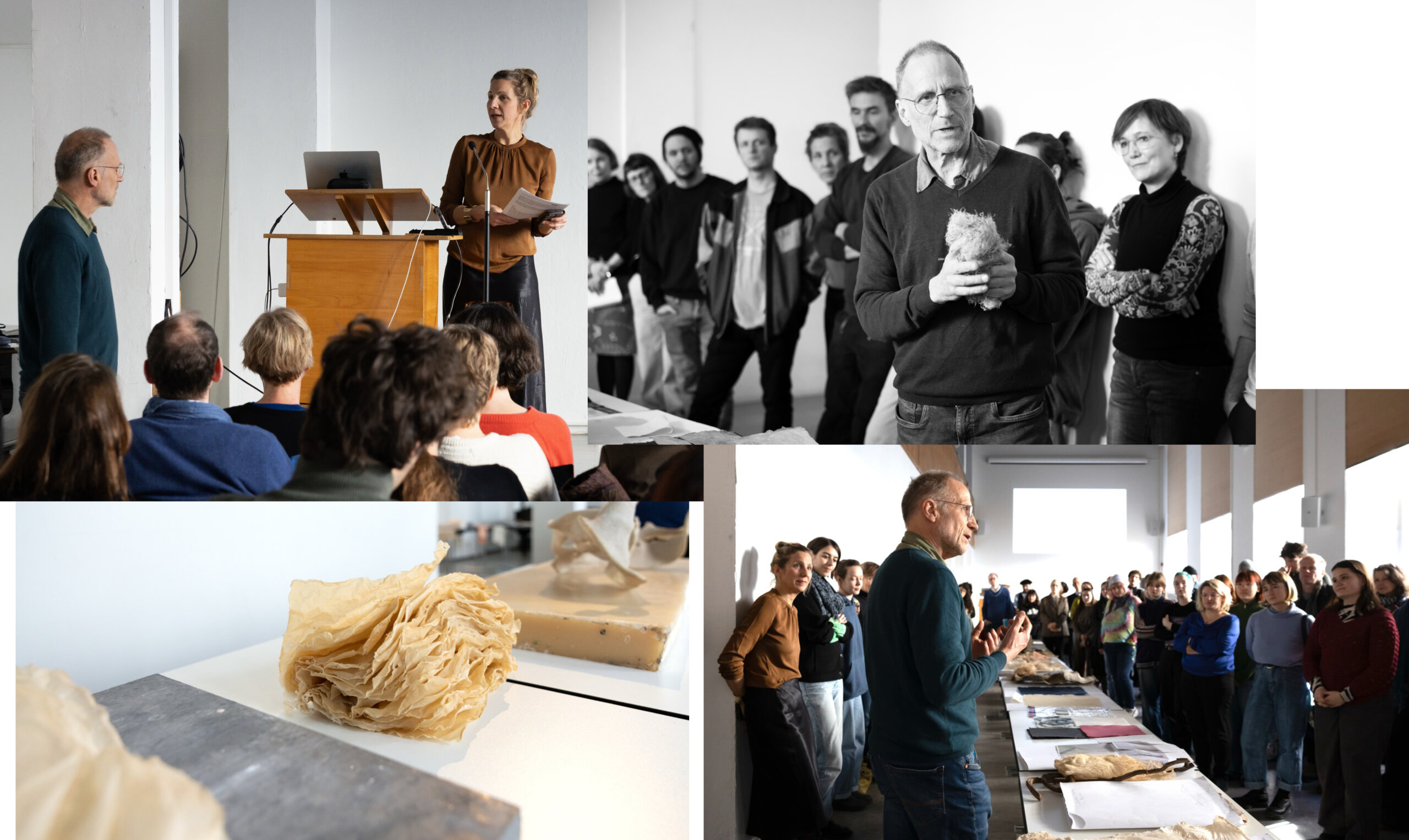
Diogo Pimentão, London-based artist, reported on the evolutional stages that led to his focus on the use of paper and graphite. Observations on the way graphite powders to the floor when drawn on vertical surfaces and marks surfaces when subjected to chance movement on paper was illustrated with examples of his work shown also as videos. He also conducted a workshop with students on the day following the event (see image below).
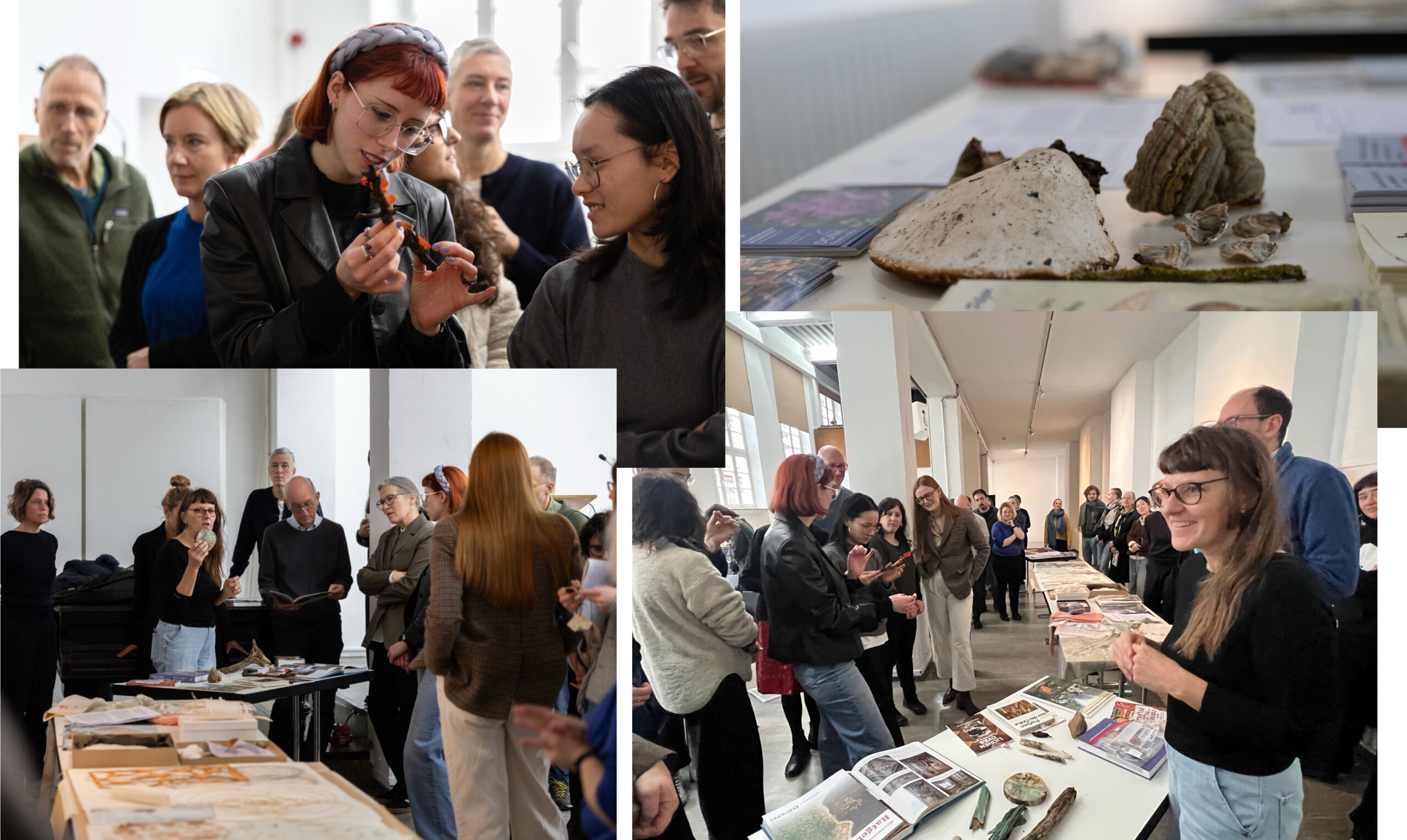
Tanja Major, paper artist and myco-paper designer, discussed the production of handmade fungi paper. She presented examples of her fungi artworks of many colors, shapes and smells that result from the raw materials she employs. Choice raw materials were displayed alongside to show the various types of mushrooms she uses, and whose building structure chitin allows for reshaping in her works.
Enno Lehmann, teacher in the workshop for painting techniques in the art department of the Stuttgart State Academy, freelance artist since 1992, presented a large number of paper samples created from a variety of unusual cellulosic raw materials. On display were also several three-dimensional sculptural pieces that were created using different pulp preparation methods, including different fiber beating methods, drying and shaping techniques.
Eva Glück, Head of Conservation and Framing at the Albertina Museum in Vienna, explained the position of paper conservation as a partner in conceptual decisions at the museum, and, in particular, the challenges of working with contemporary art. She reported on guiding the production process of large inkjet prints in accordance with the artist intent and long-term stability and designing a stackable enclosure system for over-sized artworks.
Fabienne Meyer, Deputy Head of the Conservation Department at the Kupferstichkabinett Berlin, Staatliche Museen zu Berlin, and specialist in modern and contemporary art on paper, related the way in which conservation research can play a part in the acquisition of artworks in a museum. She presented research results on the light-sensitivity of plant dyes used by the artist Johanna Unzueta in her drawings using microfading testing.
Organized by Irene Brückle (https://www.abk-stuttgart.de/studienangebot/papierrestaurierung/); Hanna Hennenkemper (https://www.abk-stuttgart.de/person/hanna-hennenkemper/, https://www.hannahennenkemper.de/); Katrin Ströbel (https://www.abk-stuttgart.de/person/katrin-stroebel/.
The event was generously sponsored by the ABK and and the Förderverein Papierrestaurierung Stuttgart.